
Understanding Strain Classifications: Indica, Sativa, Ruderalis, and Hybrids
When menu labels shape expectations: Indica vs Sativa in practice
When shoppers see “Indica” or “Sativa” on a menu, they expect predictable effects, but those labels mix plant morphology, geographic origin, and commercial marketing. The contemporary use of Indica vs Sativa often reflects broad effect categories rather than precise chemistry, so consumers and clinicians referencing condition pages such as those covering sleep health, migraine, or multiple sclerosis can find conflicting guidance. Understanding how labels arose and how modern breeding has blurred lines helps buyers and growers make more reliable selections.
Origins and definitions: landrace cannabis, ruderalis, and early taxonomy
The historic taxonomy was based on observable traits and geographic origin: tall, narrow-leafed forms from equatorial regions were called Sativa; shorter, broader-leafed plants from mountainous regions were called Indica. Landrace cannabis populations—locally adapted, stable gene pools—formed the basis for these names, and the term landrace cannabis reminds us that many original chemotypes existed before modern hybridization. Ruderalis represents a different ecological strategy: small, hardy plants that flower independently of light cycle, and these plants are the genetic source for many autoflowering strains used in contemporary breeding.
Breeders crossed landrace populations with ruderalis and domesticated cultivars to introduce traits such as fast flowering and compact form. That process produced the first widely cultivated cannabis hybrids and set the stage for a market where visual labels no longer map cleanly onto cannabinoid and terpene profiles.
Chemotype over appearance: terpenes, cannabinoids, and why labels fail as predictors
Labels like Indica and Sativa are poor stand-ins for the chemical profile that drives subjective effects. Cannabinoid ratios (for example, THC:CBD) and terpene bouquets determine much of a cultivar’s impact on consumers. Reliable strain selection requires looking at lab results or breeder data for cannabinoid content and dominant terpenes rather than relying solely on morphological labels.
For a concise scientific review of how cannabis chemistry and genetics relate to pharmacology—useful for readers who want deeper context—see this review of cannabis pharmacology and genetics, which summarizes biochemical pathways and diversity among cultivars. Referencing peer-reviewed summaries can clarify why two strains labeled as Indica can feel very different if their terpene and cannabinoid profiles diverge.
Breeding trends: hybrids, stability, and the rise of autoflowering strains
Modern breeders routinely create cannabis hybrids by crossing lines to combine desired traits: yield, aroma, disease resistance, and specific cannabinoid targets. The result is extensive genetic mixing; most commercial cultivars today are cannabis hybrids rather than true landraces. This blending explains why Indica/Sativa descriptors are often shorthand for general expectations rather than guarantees.
Autoflowering strains arose by incorporating ruderalis genetics to confer day-neutral flowering. These autoflowering strains are prized by many growers for predictable, compact cycles and are frequently recommended for small-space or quick-turnaround cultivation. However, autoflowering lines can trade off absolute yield or complexity of terpene expression versus photoperiod varieties, so growers should balance convenience against goals like maximum resin production or specific terpene profiles.
Practical selection: how to choose strains as a grower or consumer
When you evaluate a cultivar for a grow room or a therapeutic need, prioritize measurable characteristics over categorical labels. Review cannabinoid lab data, dominant terpenes, expected flowering time, and the cultivar’s breeding background. Consider whether you need the compact timing of autoflowering strains, the higher potential yields of photoperiod hybrids, or the heritage traits of landrace cannabis for breeding projects.
- Check lab-tested THC/CBD ratios and terpene reports where available.
- Decide if autoflowering strains fit your schedule and space constraints.
- For breeding, source true landrace or stable heirloom lines when genetic diversity matters.
Applying classifications: matching strains to goals and avoiding pitfalls
Use classification as a starting point rather than a final answer. If your goal is a particular therapeutic effect—such as improved sleep health or relief of muscle tension—look at documented cannabinoid profiles and consumer reports tied to specific cultivars rather than relying entirely on the Indica label. Dispensary menus and educational resources often list conditions such as migraine, Parkinson’s disease, and rheumatoid arthritis among topics where strain selection is discussed; pairing clinical information with chemistry data improves decision-making.
For growers focused on yield and predictability, plan around the genetics: autoflowering strains deliver a fast lifecycle, while photoperiod cannabis hybrids can produce larger flowers under optimized conditions. Breeders aiming to preserve biodiversity should prioritize landrace cannabis lines and carefully document crosses to track trait inheritance.
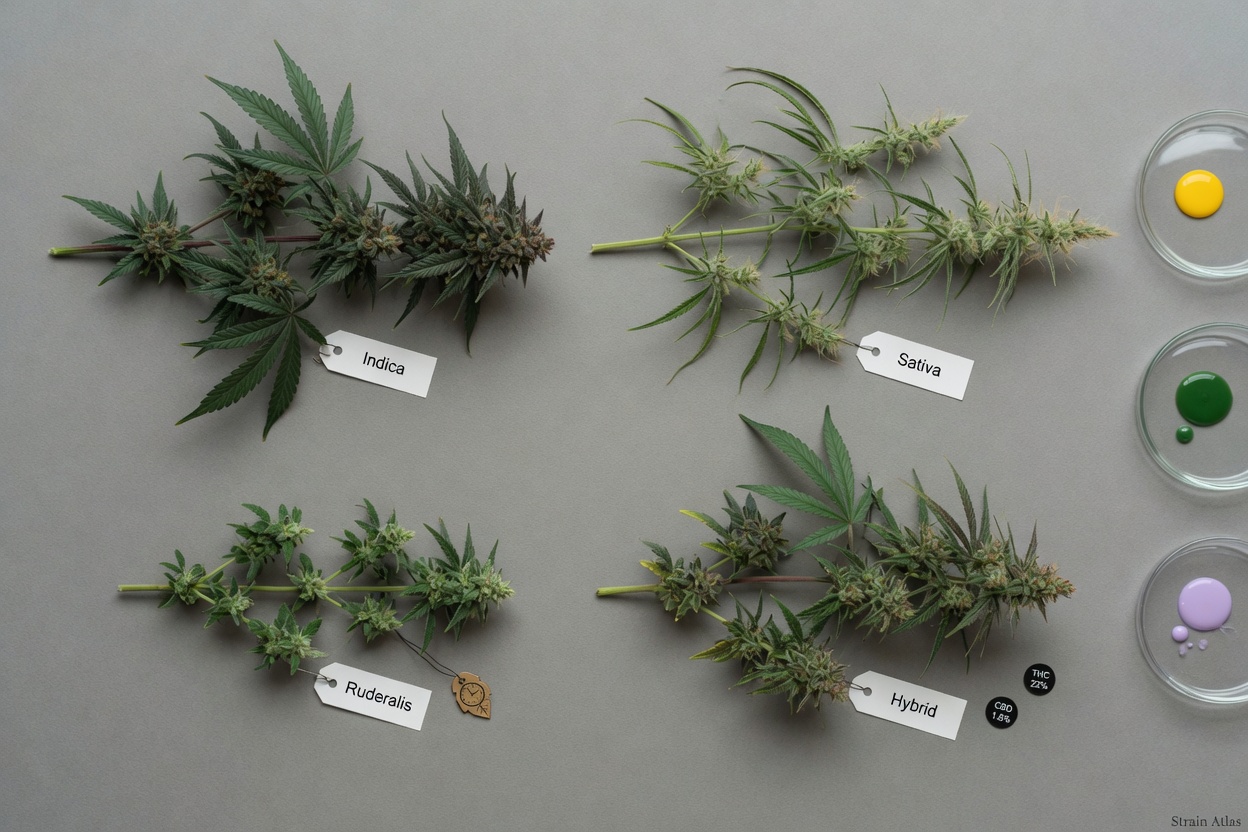
Ultimately, accurate cannabis strain classification combines genetic history, chemotype data, and observed effects. Moving beyond simple Indica vs Sativa labels to a practice that integrates cannabinoid and terpene testing, clear breeding records, and real-world cultivation results gives both consumers and cultivators the best chance of consistent outcomes.