
How to Choose the Right Cannabis Strain for Your Needs
How to Choose the Right Cannabis Strain for Your Needs
Choosing the right cannabis strain starts with a specific need: managing a medical symptom such as pain, migraine, sleep disturbance, or an inflammatory condition like rheumatoid arthritis and psoriasis, or pursuing a recreational effect or cultivation goal. Patients and consumers referenced in condition lists often consider strains for breast cancer-related symptoms, Alzheimer’s caregiving stress, COPD accommodations, multiple sclerosis spasticity, Parkinson’s symptoms, sleep health, type 2 diabetes concerns, weight management, and ulcerative colitis. Framing your decision around that primary outcome simplifies the rest of the selection process.
Match Strain Effects to Your Symptom or Goal
Use strain effects as outcome-focused shorthand: are you seeking daytime focus, evening relaxation, appetite stimulation, or targeted pain relief? The traditional Indica vs Sativa labels can provide a starting expectation—Indica-leaning strains are often associated with calming or sedating tendencies, while Sativa-leaning strains are associated with uplifting or energizing tendencies—but these are broad categories and not definitive predictors of individual response.
Prioritize cannabinoid and terpene reports over labels. A lab results sheet that lists THC, CBD, and dominant terpenes will give clearer guidance about likely effects than a strain name alone; look for terpene indicators like myrcene (often linked with relaxation) or limonene (often linked with citrus aroma and potential mood effects) and consider how those match your objectives and sensitivities.
Consider Genetics, Landrace Origins, and Breeding Trends
Genetics determine baseline growth traits and chemical potential. Heirloom and landrace strains can offer stable, predictable genetics for specific climates or traditional effects, while modern hybrids reflect breeding trends that blend parent traits to emphasize potency, yield, or particular terpene profiles.
If stable cannabinoid balance matters to you—such as a consistent CBD:THC ratio for medical use—seek strains with documented lineage and breeder records. For experimental recreational use, hybrids from recent breeding trends may deliver novel terpene combinations, but expect greater variability between phenotypes unless the breeder provides extensive testing data.
Practical Cultivation and Yield Considerations for Growers
Your growing environment should shape strain choice as much as desired effects. Indoor growers with limited space and odor constraints often choose compact, indica-dominant or autoflower varieties that fit small tents; outdoor growers in cooler or variable climates may prefer strains with landrace genetics adapted to that region.
Yield and flowering time are important but vary by cultivar and phenotype. When yield is a top priority, prioritize strains with documented grower reviews and lab-tested stability; if aroma or terpene preservation is critical, plan drying and curing methods that protect volatile compounds.
- Space: choose compact or tall strains based on vertical room.
- Climate: prefer landrace-adapted genetics for local conditions.
- Attention: autoflowers for low-maintenance, photoperiod for higher control.
How to Select at a Dispensary or in a Seed Catalog
At the point of purchase, rely on lab reports, credible strain reviews, and clear cultivar lineage. Read cannabinoid and terpene test results when available, prioritize products from labs you trust, and ask budtenders or seed vendors for phenotype stability information if you need predictable effects for medical caregiving or chronic conditions.
When researching broader plant biology, legal status, and historical context related to cannabis taxonomy and use, consult reputable reference pages such as the Cannabis overview on Wikipedia, which provides an accessible summary of botanical classification and cultural history that can help contextualize strain lineage and naming conventions.
Sample cautiously: try small amounts or obtain low-dose products first if you are treating a medical condition like migraine, sleep disturbances, or symptoms associated with chronic illnesses listed earlier. Keep notes on how each strain’s effects, onset, and duration relate to your symptom control or recreational expectations to refine future choices.
Checklist for a Confident Strain Choice
Use a brief decision checklist before buying: confirm your primary goal, review cannabinoid and terpene data, check genetic background and breeder notes, match strain to your grow conditions if cultivating, and start with a low dose or a small sample. This systematic approach aligns strain classification and strain reviews with practical cultivation and consumption realities, helping you select the best marijuana strains for your specific needs without relying only on marketing names.
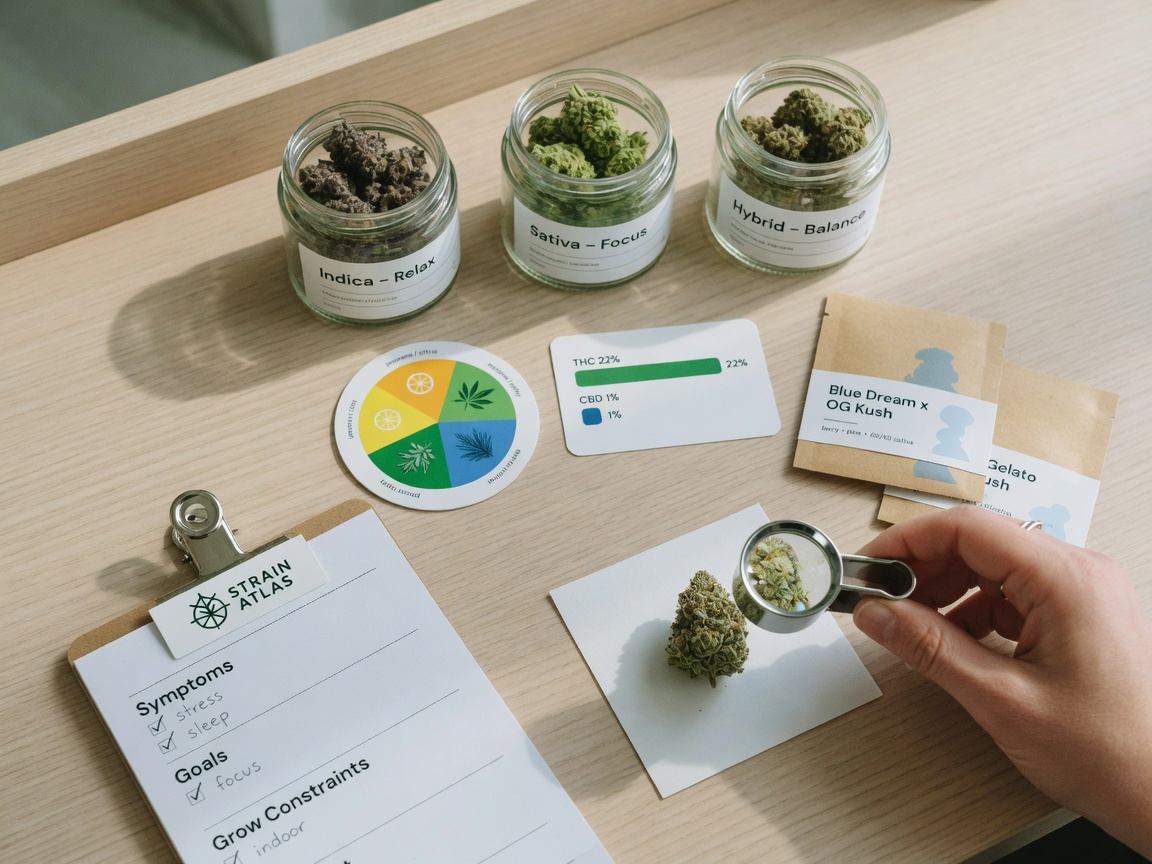
Choosing the right cannabis strain becomes manageable when you focus on measurable attributes—cannabinoid ratios, terpene profiles, genetic stability, and cultivation compatibility—rather than only on familiarity with strain names. Whether your priority is symptom relief, yield, or a particular sensory profile, combining lab data, breeder transparency, and cautious personal testing will keep outcomes consistent and predictable over time.